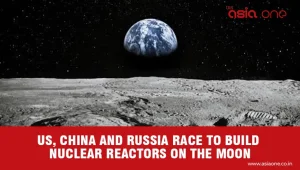



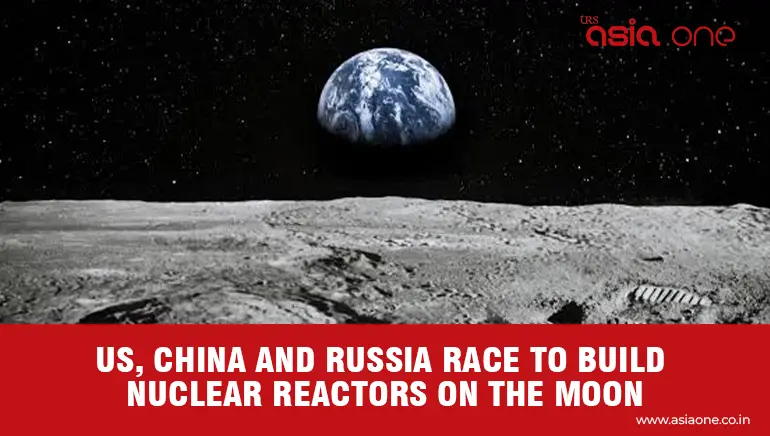
The United States, China and Russia are developing nuclear reactors for future lunar operations, with projects targeting the Moon’s south pole and potential permanent bases.
NASA is developing Lunar Reactor-1 (LR-1), a fission surface power system planned for deployment by 2030. The project is intended to provide continuous electricity during periods when solar power is unavailable. NASA also described nuclear power as a key technology for sustained lunar operations.
The US reactor is expected to produce about 20 kilowatts of electricity and operate for several years without human intervention. NASA is also developing the Space Reactor-1 Freedom mission, which will test nuclear electric power technology before the lunar system is deployed.
Russia and China are developing a separate nuclear power system for the International Lunar Research Station. Moscow has tasked state agencies with developing a reactor known as Selena, with deployment planned for 2036. The system is expected to generate up to 10 kilowatts and operate autonomously for about a decade.
The projects are aimed at providing power in environments where solar generation is unreliable. A lunar night lasts roughly two weeks, while permanently shadowed areas near the south pole receive little or no sunlight.
The US, China and Russia have previously used radioisotope power systems in space. The new projects involve larger fission reactors designed to support sustained surface operations.
The development of lunar nuclear power is also raising questions over safety and access to areas surrounding reactor installations. NASA has identified reliable surface power as one of the requirements for establishing a sustained presence on the Moon.