

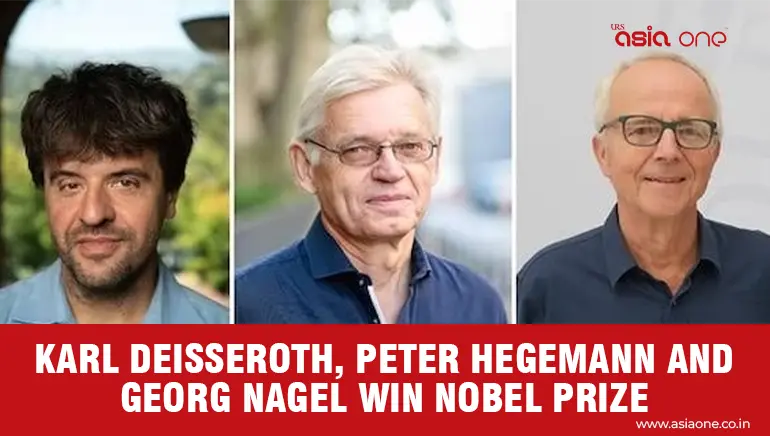
Karl Deisseroth, Peter Hegemann and Georg Nagel have won the 2026 Nobel Prize in Physiology or Medicine for discoveries concerning light-gated ion channels and optogenetics. Hegemann and Nagel laid the foundation for the field through their discovery of channelrhodopsins, light-sensitive proteins that control the movement of ions across cell membranes. Deisseroth later built on this work to develop methods for using these proteins to control specific neurons. Optogenetics combines genetic techniques with light-sensitive proteins, allowing researchers to activate or inhibit selected nerv
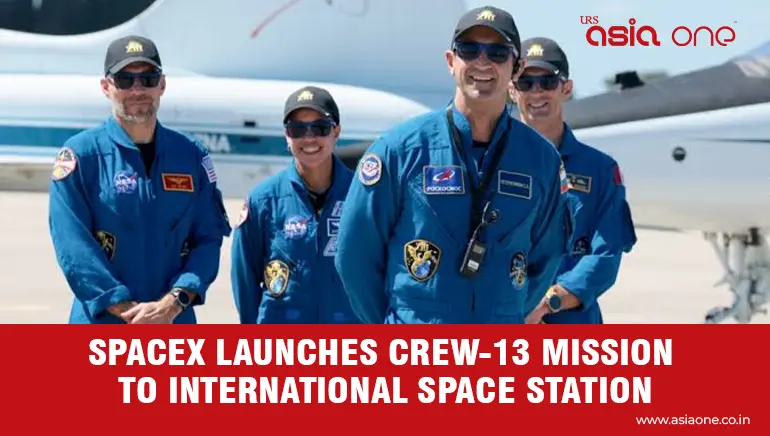
SpaceX launched NASA’s Crew-13 mission to the International Space Station on October 1, carrying four astronauts aboard a Crew Dragon spacecraft. A Falcon 9 rocket lifted off from Space Launch Complex 40 at Cape Canaveral Space Force Station in Florida at 11:10 a.m. EDT. The crew comprises NASA astronauts Jessica Watkins and Luke Delaney, Canadian Space Agency astronaut Joshua Kutryk and Roscosmos cosmonaut Sergey Teteryatnikov. Watkins is the mission commander, while Delaney serves as pilot. The Crew Dragon spacecraft reached the International Space Station later the same day. It doc

Indonesia is developing 14 solar power plants across six provinces as the first projects under its 100-gigawatt-peak (GWp) national solar programme. The plants are expected to save the state budget about 4.6 trillion rupiah, or roughly US$257 million, each year. The projects will be located in East Java, Central Java, West Java, Bali, the Riau Islands and the Bangka Belitung Islands. They will include both ground-mounted and floating solar facilities. President Prabowo Subianto officially launched the wider 100 GWp programme in Jembrana, Bali, on August 25. Construction of the 14 initia
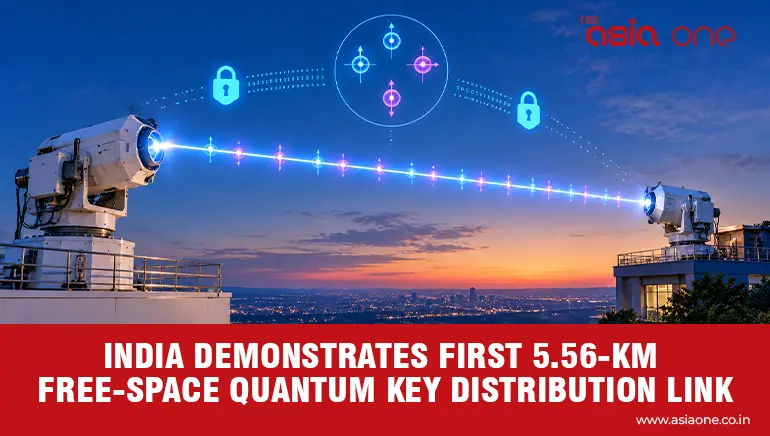
India has demonstrated its first free-space Quantum Key Distribution (QKD) link over a distance of 5.56 kilometres. The trial was conducted by QNu Labs with the Bhaskaracharya National Institute for Space Applications and Geo-informatics (BISAG-N) and IIT Gandhinagar. The field trial took place on the night of September 27–28 in Gujarat. It established a secure quantum communication channel between BISAG-N and IIT Gandhinagar using a free-space optical link. The system recorded a Quantum Bit Error Rate below 5 per cent and generated secure keys at a rate of 230–260 bits per second.
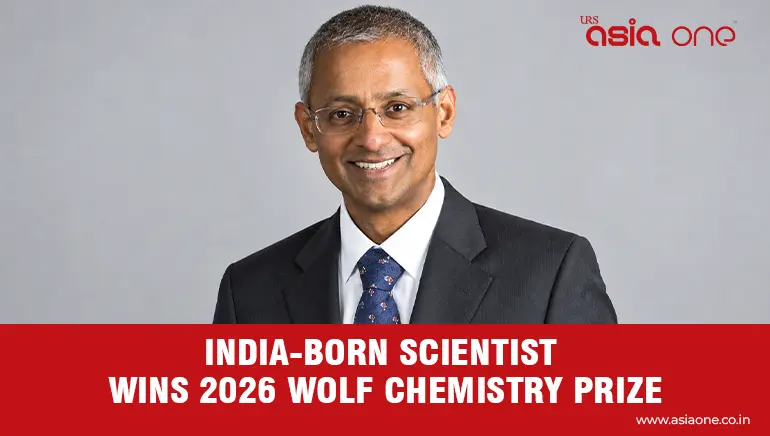
Indian-born scientist Shankar Balasubramanian has been awarded the 2026 Wolf Prize in Chemistry alongside British chemist David Klenerman and French biophysicist Pascal Mayer. The trio was recognised for developing low-cost, large-scale DNA sequencing methods for genomic medicine. Balasubramanian and Klenerman pioneered a massively parallel sequencing approach that allowed millions of DNA fragments to be read simultaneously. Mayer contributed technology that helped turn the research into a practical high-throughput sequencing system. Their work helped establish next-generation sequencin

The United States, China and Russia are developing nuclear reactors for future lunar operations, with projects targeting the Moon’s south pole and potential permanent bases. NASA is developing Lunar Reactor-1 (LR-1), a fission surface power system planned for deployment by 2030. The project is intended to provide continuous electricity during periods when solar power is unavailable. NASA also described nuclear power as a key technology for sustained lunar operations. The US reactor is expected to produce about 20 kilowatts of electricity and operate for several years without human int

Singapore has been designated the Asia-Pacific regional hub of the Global Alliance for Genomics and Health (GA4GH), giving the country a formal role in coordinating the organisation's engagement across the region. Precision Health Research, Singapore (PRECISE) was named GA4GH's first Regional Hub Institution at the alliance's 14th Plenary meeting on September 29. A memorandum of understanding was signed between GA4GH President Peter Goodhand and PRECISE Executive Director Professor Patrick Tan. Under the new arrangement, PRECISE will serve as the focal point for GA4GH activities across
Scientists from the Raman Research Institute (RRI) in Bengaluru have detected the faint glow of hydrogen from roughly eight billion years ago, when the universe was about five billion years old. The research was carried out as part of a joint Canadian, American and Indian effort. The findings were published in The Astrophysical Journal on September 28. Researchers used the Canadian Hydrogen Intensity Mapping Experiment (CHIME) radio telescope in British Columbia to make the first “standalone” detection of hydrogen’s glow from the early universe. The telescope, built in 2017, used a m

Microsoft plans to invest more than US$10 billion in capital and operating expenses across the Middle East between now and 2030 as part of a new regional technology framework. The company announced the plans on September 23 during a roundtable held on the sidelines of the United Nations General Assembly in New York. The investment will focus initially on Kuwait, Qatar, Saudi Arabia and the United Arab Emirates. Microsoft plans to expand cloud and AI infrastructure across these markets while increasing capacity and developing new capabilities for customers and governments. The comp
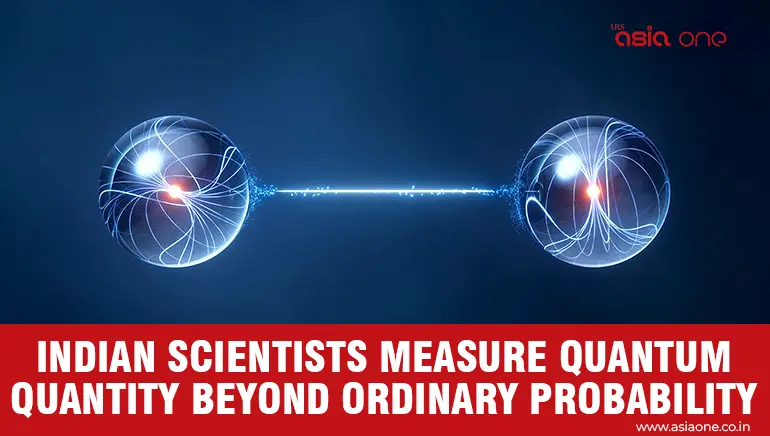
Indian researchers have experimentally measured a quantum measure of 1.17, exceeding the upper limit of one that applies to ordinary probability. The experiment was conducted by physicists at the Raman Research Institute (RRI) and reported on September 24. The result relates to Quantum Measure Theory (QMT), a framework that describes quantum systems through possible histories rather than only their states and measurement outcomes. In this approach, a quantum measure can account for interference between different possible paths taken by a particle or photon. The RRI team deve