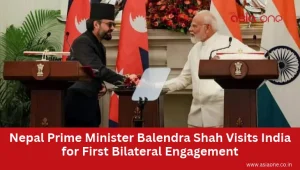



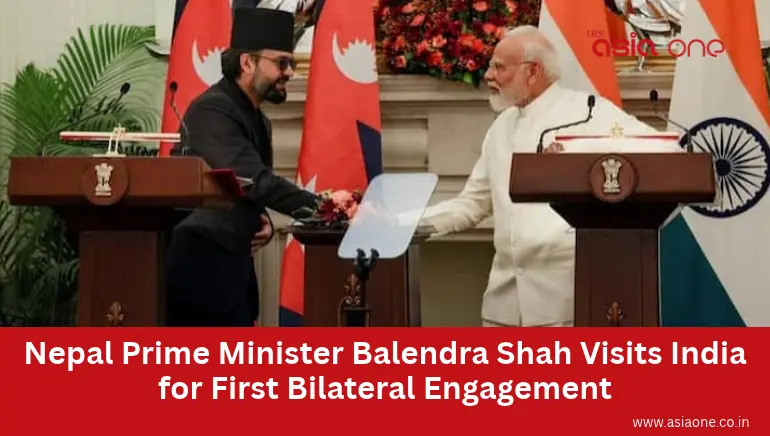
Nepal Prime Minister Balendra Shah arrived in New Delhi on 22 November for a two-day state visit to India, marking his first bilateral visit to the country since assuming office. He travelled with a high-level official delegation at the invitation of Indian Prime Minister Narendra Modi.
Shah was received at Indira Gandhi International Airport by Union Minister of State for Commerce and Industry Jitin Prasada and senior officials from both countries. His programme included a ceremonial welcome at Rashtrapati Bhavan and a visit to Rajghat, where he paid tribute to Mahatma Gandhi.
External Affairs Minister S Jaishankar called on Shah on the first day of the visit. Their discussions covered several areas of Nepal-India cooperation, including connectivity, trade, transit, energy, culture, education and people-to-people ties. Sports, particularly cricket and football, were also discussed.
Modi held talks with Shah and hosted a luncheon in his honour. The two leaders reviewed bilateral cooperation and exchanged views on regional and international developments.
The visit also comes after devastating floods in Nepal’s Rasuwa-Bhotekoshi region. Shah acknowledged India’s humanitarian and technical assistance following the disaster, which caused loss of life and extensive damage to property.
Economic engagement was another part of the programme. Nepal’s Finance Minister Swarnim Wagle addressed a Nepal-India Business Roundtable, where he interacted with Indian business leaders, entrepreneurs and investors. He encouraged greater investment in Nepal to strengthen economic links between the neighbouring countries.
The visit provides an opportunity for both governments to review existing cooperation and discuss areas where bilateral engagement can be expanded. India and Nepal share close geographical, economic and cultural ties, with cross-border connectivity and energy cooperation remaining important parts of the relationship.