



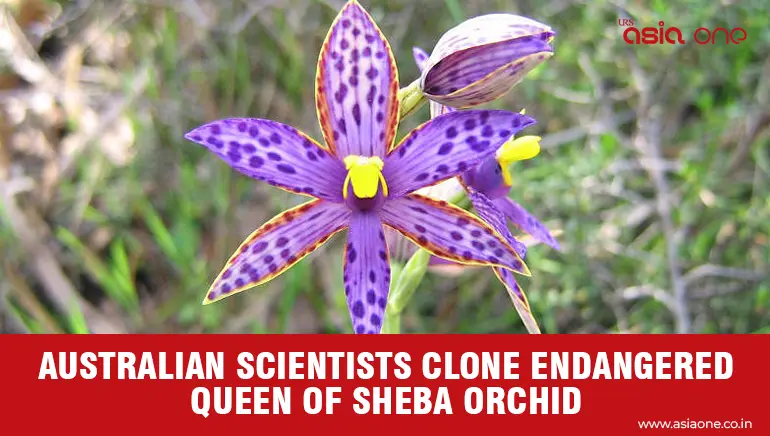
Scientists in Western Australia have achieved a plant cloning breakthrough by successfully cloning the critically endangered Queen of Sheba orchid (Thelymitra variegata). The rare wildflower, found only on the Swan Coastal Plain, has fewer than 30 plants remaining in the wild, making it one of Australia’s most threatened orchid species.
Researchers at the Botanic Gardens and Parks Authority (BGPA) in Kings Park began the project in 2021 using a plant tissue propagation technique known as somatic embryogenesis. Starting with a single microscopic seed, the team has now produced more than 1,000 healthy cloned plants. In July 2026, the first cloned Queen of Sheba orchid successfully flowered in the laboratory, marking a significant milestone for endangered wildflower conservation.
The plant cloning breakthrough offers major advantages over natural reproduction, where only one in every 20,000 to 50,000 seeds survives. The cloned orchids reach the flowering stage in about three years, compared to roughly seven years in nature. Researchers also found that the laboratory-grown orchids developed underground tubers up to 10 times larger than those produced through traditional propagation, improving their chances of survival.
Before the orchids can be returned to the wild, scientists are working to culture the mycorrhizal fungi essential for their growth and studying native bee pollinators to ensure successful reproduction. The Queen of Sheba orchid project demonstrates how advanced cloning techniques could support the recovery of other critically endangered plant species.