


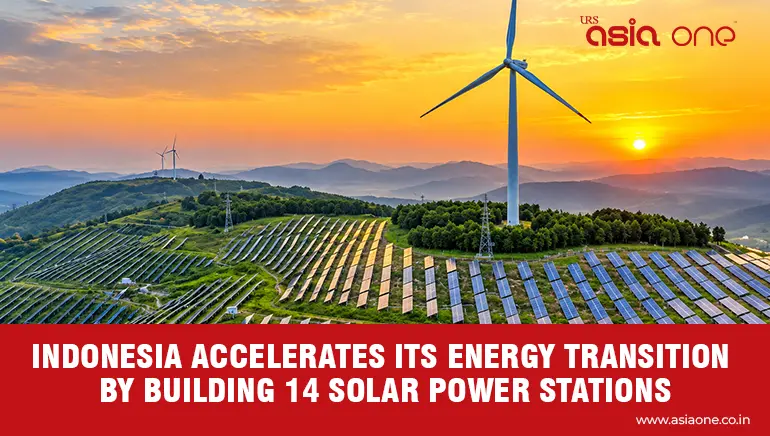
Indonesia is developing 14 solar power plants across six provinces as the first projects under its 100-gigawatt-peak (GWp) national solar programme. The plants are expected to save the state budget about 4.6 trillion rupiah, or roughly US$257 million, each year.
The projects will be located in East Java, Central Java, West Java, Bali, the Riau Islands and the Bangka Belitung Islands. They will include both ground-mounted and floating solar facilities.
President Prabowo Subianto officially launched the wider 100 GWp programme in Jembrana, Bali, on August 25. Construction of the 14 initial projects began as part of the programme.
The first phase requires an estimated investment of 135 trillion rupiah. Domestic and international businesses are expected to finance the projects.
Indonesia currently has 1.76 GW of installed solar capacity, compared with total national electricity generation capacity of 108 GW. The country’s estimated solar energy potential is 3,294 GW.
The programme is intended to increase renewable electricity generation and reduce dependence on fossil fuels. Government Communications Agency head Muhammad Qodari said the wider programme could cut diesel consumption by up to six million kilolitres a year.
The government estimates the 100 GWp programme could potentially save the state up to 73.9 trillion rupiah annually. It could also create about 5.52 million jobs.
Electricity from the projects will support productive activities, including micro, small and medium-sized enterprises. It will also be used by fishermen operating electric-powered boats.
Some of the generated electricity will be supplied to areas that previously lacked access to electricity. The programme is part of Indonesia’s broader effort to increase renewable energy use and meet its climate targets.