





Singapore has launched a national program called Hybrid Quantum Classical Computing (HQCC 1.0), which aims to integrate quantum computing, artificial intelligence, and high-performance computing. The program, funded by the National Research Foundation with $24.5 million, aims to expand middleware research, create novel algorithms, and improve workforce capabilities to foster smooth collaboration between classical and quantum systems. Josephine Teo, Singapore's Minister for Digital Development and Information, announced the idea at SupercomputingAsia 2025 on March 11, 2025. "We will take a
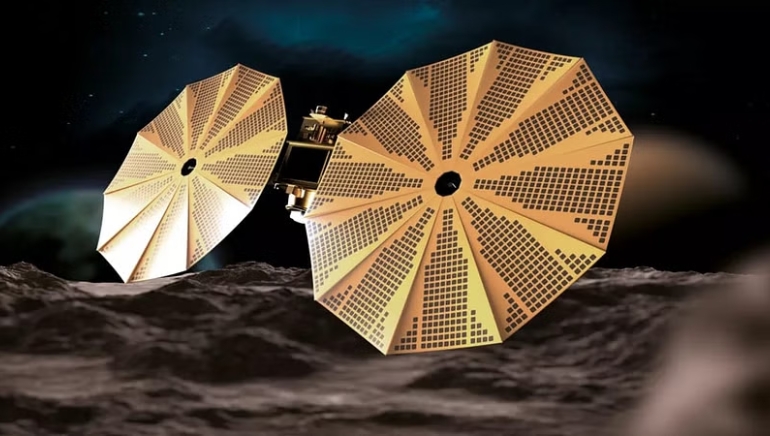
The UAE Space Agency has successfully completed the Critical Design Review (CDR) for the Emirates Mission to the Asteroid Belt (EMA), a key step forward in the ambitious deep-space exploration mission. The review, which took place between February 24 and 26, 2025, brought together a group of eminent Emirati and foreign specialists. After this phase is completed, the project moves on to the assembly, integration, and rigorous testing of the Mohammed Bin Rashid Explorer, the spacecraft that will embark on the journey. Salem Butti Salem Al Qubaisi, Director-General of the UAE Space Agency,

Bharti Airtel has announced a strategic alliance with SpaceX, the aerospace business founded by Elon Musk, to launch Starlink satellite internet services in India. This is Starlink's first big collaboration in the country, establishing Airtel as a key player in the satellite broadband business. The partnership's goal is to improve connection in rural and underserved areas, ensuring that isolated places have access to high-speed internet. However, the launch is subject to regulatory approval from the Indian National Space Promotion and Authorisation Centre and the Department of Telecommunic
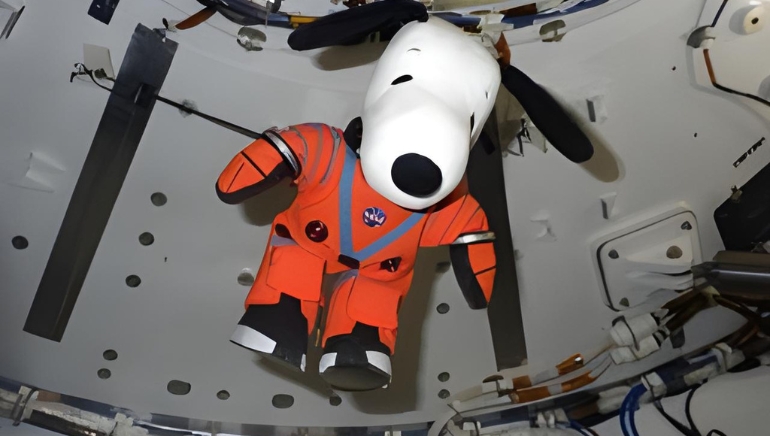
NASA is seeking designers from around the world to create a special zero-gravity indicator that will travel with astronauts on the Artemis II mission. These little, soft things act as visual cues, signaling the move into space. The chosen design will float within the Orion spacecraft when the crew begins their voyage around the Moon. The competition, which runs until May 27, seeks innovative proposals that represent NASA's Artemis campaign, space exploration, or scientific discovery. The design must meet specific material and size requirements. A maximum of 25 finalists, including young ki
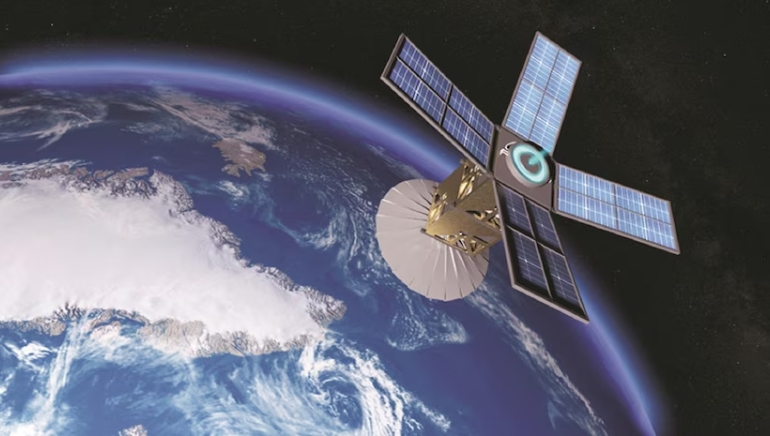
Digantara, a Bengaluru-based start-up, successfully launched the world's first commercial space surveillance satellite. The cutting-edge satellite, known as SCOT (Space Camera for Object Tracking), is capable of tracking space trash and objects as small as five centimetres in orbit. The achievement represents a substantial advancement in space monitoring technology. On January 14, SCOT launched as part of SpaceX's Transporter-12 mission. On Saturday, the satellite commenced operations, capturing its first image over South America. The image, which showed Earth's limb with Buenos Aires illu

Malaysia has secured a big agreement with British chip designer Arm Holdings, gaining access to innovative semiconductor technology as the country attempts to strengthen its position in the international supply chain. The 10-year, $250 million agreement will grant Malaysia intellectual property rights to seven compute subsystems as well as access to the Arm Flexible Access program. The agreement is planned to expand Malaysia's semiconductor industry beyond midstream and downstream activities, allowing it to create high-value chip designs. PM Anwar Ibrahim stated that Arm will open its firs
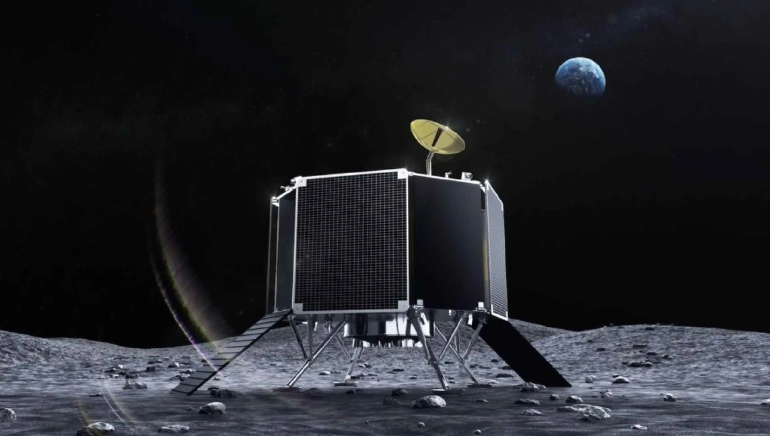
The Japanese lunar exploration corporation ispace has announced plans to undertake a second moon landing on June 6. During a press conference on Monday, Takeshi Hakamada, the CEO and founder of the company, provided a comprehensive overview of the mission's progress, citing that all conditions are stable. The mission, which began on January 15 with the launch of the SMBC x HAKUTO-R Venture Moon Mission 2 RESILIENCE lander, has encountered no technical issues so far. According to a news statement from ispace, the lander has maintained a consistent connection and is operating within predicte
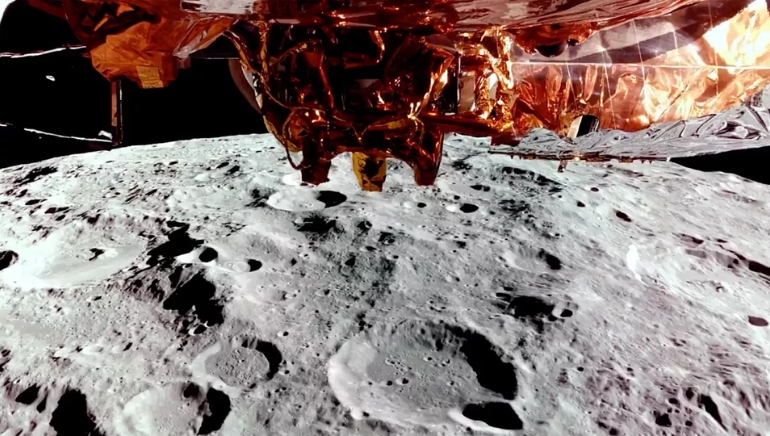
Firefly Aerospace's Blue Ghost lunar lander has safely landed in the Mare Crisium region of the Moon, following a carefully planned powered descent. The US-based corporation has achieved history as the first commercial company to complete a successful lunar landing. The lander was launched on January 15, 2025, by a SpaceX Falcon 9 rocket. After nearly a month in Earth's orbit, it spent 16 days in lunar orbit, fine-tuning its course before making its final descent. Blue Ghost landed precisely on Sunday, March 2nd, at 2:34 a.m. CST in a 100-meter target zone near Mons Latreille. Shortly a
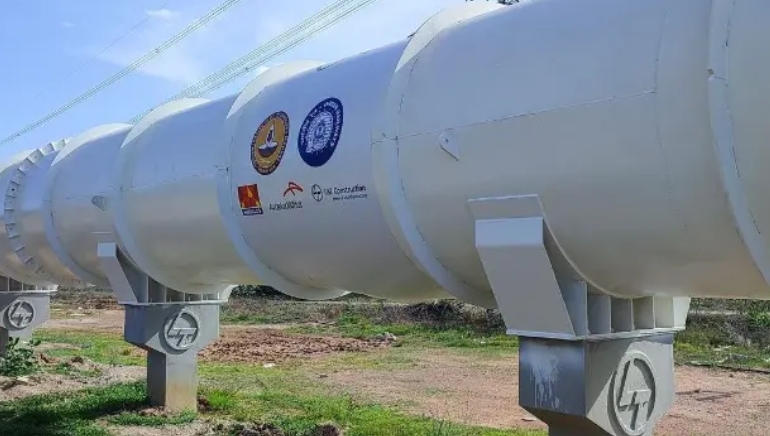
With the construction of its first hyperloop test track, India has made a major advancement in the transformation of transportation. The 422-meter-long test track, developed by IIT Madras with cooperation from the Ministry of Railways, allows for high-speed travel in a near-vacuum environment. Trains may now travel at speeds of over 1,000 km/h because of the technology, providing a glimpse of ultra-fast travel in the future. Union Minister Ashwini Vaishnaw said the first commercial project will be deployed across a 4,050-kilometer site after the technology has been thoroughly tested and ap
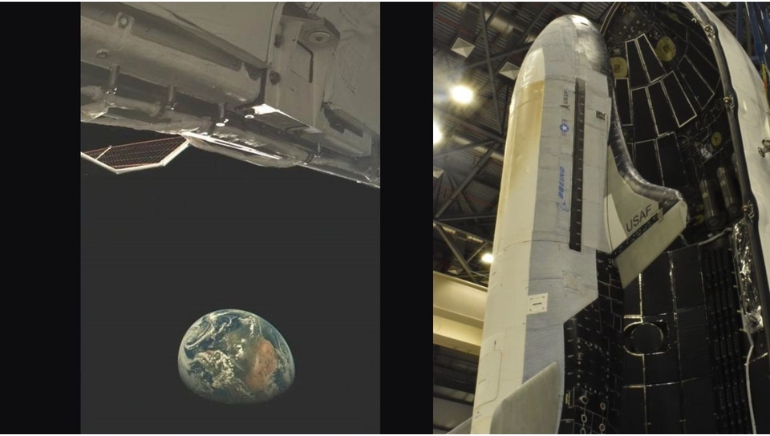
For the first time, the United States Space Force has publicly released an image of its classified X-37B space plane in orbit, providing a rare insight into one of the most secretive spacecraft in use. The image, taken by an onboard camera, shows Earth in the background with the X-37B's solar panel and open payload bay partially visible. The Boeing-built X-37B has been in orbit for more than a year, having launched on its seventh mission on December 28, 2023, atop a SpaceX Falcon Heavy rocket. Previously, the only known video of the spacecraft in orbit was a brief excerpt from a SpaceX lau