



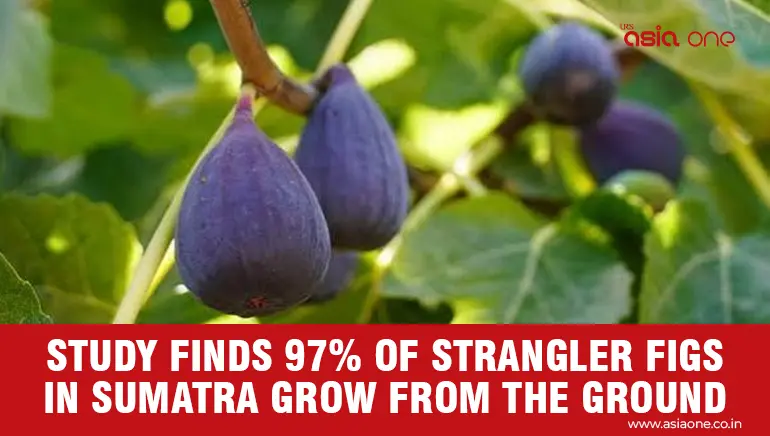
Scientists have found that 97 per cent of strangler figs recorded in two burned peat-swamp forest sites in Sumatra, Indonesia, had established directly on the ground rather than on host trees.
The study, published in Ecology and Evolution, examined 138 strangler fig individuals across 3.4 hectares at two post-fire sites on the Kampar Peninsula. Of these, 134 had established on or near the ground, with their roots growing in soil or leaf litter. Only four had established on other trees.
The researchers recorded 10 fig species, with Ficus sundaica accounting for 67 per cent of the strangler figs observed.
Strangler figs typically begin their lives as epiphytes, growing on host trees before sending roots towards the ground. Once these roots reach the soil, the plants can develop into large trees. The pattern observed in the burned peatlands was different, with most of the figs establishing without a host tree.
The researchers linked this unusual pattern partly to the history of the sites. Fires had removed many of the trees that could have served as hosts, while the remaining soil and leaf litter provided surfaces where fig seeds could germinate.
The study also recorded figs at different stages of development, from newly germinated seedlings to larger established trees, suggesting that ground-based establishment is continuing at the sites.
The researchers said the findings provide systematic evidence of widespread terrestrial establishment by strangler figs in burned tropical peatlands. They also noted that the trees can support frugivore communities through their fruit production, potentially contributing to the recovery of fire-damaged forests.