



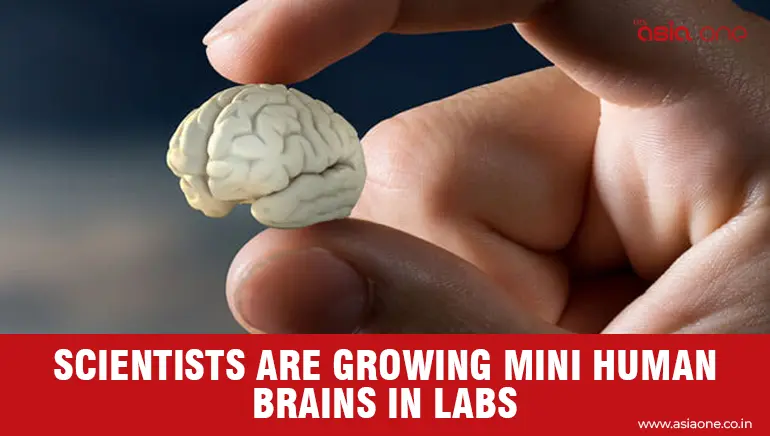
Scientists are growing three-dimensional brain organoids from adult human cells, creating laboratory models that reproduce similar features of developing human brains. Researchers first reprogram adult cells into induced pluripotent stem cells (iPSCs), guide them into neurons and allow the cells to self-organise. The resulting organoids contain connected neurons capable of communicating and generating electrical activity, although they lack the structure and complexity of a real human brain.
The main goal is to study brain development and neurological diseases that are difficult to investigate inside living humans. Brain organoids can also provide a more human-relevant model for testing medicines, potentially reducing reliance on animal research. The US National Institutes of Health has supported this broader shift, including $87 million for a Standardized Organoid Modeling Center in 2025 and more than $150 million for human-based biology research in 2026.
The field has also raised questions about whether living neural systems can learn. In a 2022 experiment, Melbourne-based Cortical Labs connected human and mouse neurons to electrodes and placed them in a simulated version of Pong. The neural cultures improved their responses over time, although the experiment did not involve a 3D brain organoid and did not demonstrate consciousness.
Researchers are now exploring organoid intelligence (OI), which investigates whether living neural tissue could become a biological computing substrate. Cortical Labs has developed CL1, a system connecting living neurons with electronics and software.