


Occupied for thousands of years, the land of the Emirates has recovered from Jebel Faya in the Emirate of Sharjah, a settlement of people from Africa some 127,000 years ago, and even had trading links with the Harappan culture of the Indus Valley. Rich in heritage and ancient existence, the modern UAE is also rich in culture, tourism, business opportunities, architecture, and welcomes with open arms and heart all that has the capacity to make the UAE and the world a better place.
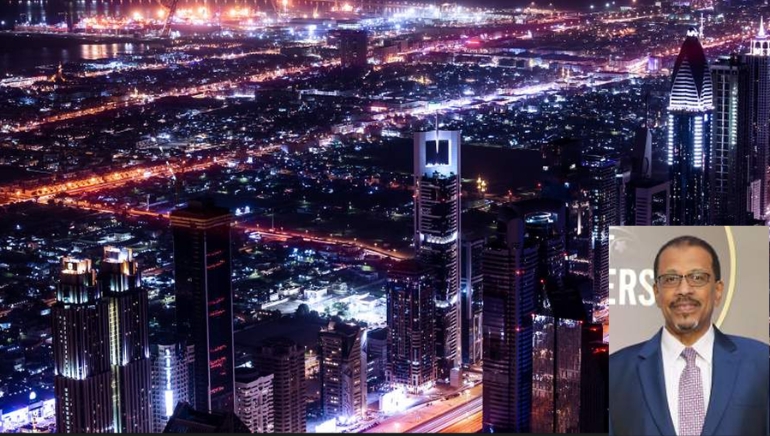
By His Excellency Dr Mohamed Omar Abdulla Balfaqeeh, Ambassador of United Arab Emirates in Singapore
“Emirati culture is based on the Arabian culture and has inFLuences from Persia, India, and East Africa”
Ancient stone tools discovered at Jebel Barakah on the Arabian coast date back to a habitation from 130,000 years ago, and active human settlement in the region include the Hafit period from 3,200 to 2,600 BCE; the Umm Al Nar culture from 2,600 to 2,000 BCE; the Wadi Suq people from 2,000 to 1,300 BCE; and then the Iron Age 1 from 1,200 to 1,000 BC; Iron Age 2 from 1,000 to 600 BC; and Iron Age 3 from 600 to 300 BC; finally giving way to the Mleiha period (300 BC onward). The various provinces and tribes created the base that is reflected in today’s modern United Arab Emirates.
WELLS OF WEALTH
Being the second-largest economy in the GCC (after Saudi Arabia), UAE’s economy has grown by more than 300 times since its independence in 1971, based on both oil and non-oil trade. In 2017, it was also ranked as the 26th best nation in the world for doing business based on its economy and regulatory environment by the World Bank Group.
Emirati culture is based on Arabian culture and influences from Persia, India, and East Africa can also be found in it. The most significant such influence is visible in Arabian and Persian architecture and folk arts of the UAE. For example, the barjeel is a distinctive wind tower that tops traditional Emirati buildings. It has the most diversified economy in the Gulf Cooperation Council (GCC) countries, and except Dubai—which has far smaller oil reserves and is therefore bolder in its diversification policy—most of the UAE is dependent on oil revenues. Petroleum and natural gas continue to play a central role in the economy, especially in Abu Dhabi, and till 2009, more than 85% of the UAE’s economy was based on oil exports. However, successful efforts at economic diversification have reduced the portion of GDP based on oil and gas output to 25%.
The UAE boasts the most advanced and developed infrastructure in the region, as since the 1980s it has been spending billions of dollars on infrastructure. The larger emirates of Abu Dhabi and Dubai have developed well over the years, and the northern emirates are rapidly following suit, providing major incentives for developers of residential and commercial property. Tourism constitutes a significant growth sector for the entire UAE economy, and Dubai is the top tourism destination in the Middle East, holding up to 66% share of the UAE’s tourism economy, Abu Dhabi having 16% and Sharjah 10%. The annual MasterCard Global Destination Cities Index puts Dubai as the fifth most popular tourism destination in the world. In 2013, 10 million tourists visited Dubai.
The UAE has a strong literary inclination. The Sharjah International Book Fair is the oldest and largest in the country. Sharjah also has a Heritage District containing 17 museums, and in 1998 it was the Cultural Capital of the Arab World. Dubai holds several art galleries in the Al Quoz area and also museums, such as the Salsali Private Museum. Saadiyat Island is Abu Dhabi’s culture district.
TOURISM OPPORTUNITIES
Travel and tourism sector contributed, in all, to the UAE’s GDP with AED 159.1 billion (USD 43.3 billion) in 2016, which was equivalent to 12.1 per cent of the total GDP. It is forecast to rise by 4.9 per cent per annum from 2017 to 2027 to AED 264.5 billion (USD 72 billion) which would be equivalent to 12.4 per cent of the total GDP in 2027. Similarly, the travel and tourism sector supported, in all, 617,500 jobs in the UAE which is 10.4 per cent of total employment, and these figures are expected to rise by 2 per cent per annum to 770,000 jobs which would be 11.1 per cent of total employment in 2027. The UAE has launched several initiatives to boost the travel and tourism sector. Some of the initiatives are listed below: Sustainable Tourism Development in Abu Dhabi: Department of Culture and Tourism in Abu Dhabi works towards the sustainable tourism development of the emirate, and prepares the annual Sustainability Report, launching and implementing “green” tourism and hotel initiatives, holding environment-related exhibitions and conferences.
Dubai Tourism Strategy 2020: Launched in 2013, it is a strategic roadmap with the key objective of attracting 20 million visitors per year by 2020, and focuses on making Dubai the “first choice” for international leisure and business travellers. The strategy has three key objectives: maintaining market share in existing source markets, increasing market share in markets with high growth potential, and increasing the number of repeat visits.
Sharjah Tourism Vision 2021: In 2021, the UAE would celebrate its 50th year of founding, and Sharjah Tourism Vision 2021 aims to attract more than 10 million tourists for the celebrations. Sharjah Commerce and Tourism Development Authority has adopted four strategic pillars for the success of its vision: promoting Sharjah as an ideal family tourism destination by offering distinct packages and offers specially designed for families, adopting an innovative tourism approach to improve the tourist experience through the provision of innovative solutions, enhancing efficiencies in the tourism sector through partnership and collaborative action to provide world-class tourism facilities and capabilities, and promoting cultural and heritage elements among families to build Sharjah as an international cultural hub.
Ajman Strategic Plan for Tourism 2015–2021: Ajman has a strategic plan to become the destination of choice for all types of tourists through effective strategic partnerships and continuous innovation by focusing on improving customer experience and providing value-added services, enhancing sustainability and growth, operational effectiveness, an empowered workforce in a creative work environment, rational expenditures, and optimal investment of financial resources.
TOURISM LANDMARKS
The iconic skylines of high-rises and world-famous beach resorts have made the United Arab Emirates a favourite destination for family holidays for the entire world. Landmark tourist attractions such as Dubai’s towering Burj Khalifa and Abu Dhabi’s modern Sheikh Zayed Mosque have brought UAE its maximum number of tourists. To understand the UAE deeply, one must look beyond the skyscrapers, shopping and sandy shores, and explore its starry desert nights, its various forts and some famous and glitzy high-rises. Those looking for adventure must go to the deserts and the jagged peaks of the Hajar Mountains. Some destinations need special mention: Burj Khalifa: It is not only the United Arab Emirates’ most famous building and a world-famous landmark of Dubai as the world’s tallest building, it is also the tallest freestanding structure in the world, the highest observation deck in the world, and carries an elevator with the longest travel distance in the world. Sheikh Zayed Mosque, Abu Dhabi: Famous as a mammoth modern mosque of incredible beauty, it is a work of both contemporary design and ancient craftsmanship, harmoniously blending the modern and ancient styles and techniques to create a new interpretation of Islamic architecture. Its interiors use lavish amounts of gold, mosaic tiles, and glass work, and a generous amount of marble, and its exteriors use blindingly white stone contrasting dramatically under the Emirati blue sky. Hajar Mountains: Creating the jagged and wild heart of the United Arab Emirates through the desert, with twisting roller-coaster roads connecting the region’s villages, Hajar Mountains offer a heavenly appearance, with plenty of hiking, trekking, and bird-watching opportunities. Jebel Hafeet: It is the second-highest peak in the United Arab Emirates, and makes for an exciting trip with its winding road to the top. From the Summit, you are able to view the area’s vast sweep of desert. Bastakia: Considered the last remaining fragment of Old Dubai, it’s nostalgic because of its narrow lanes, beautifully preserved buildings of the past in typical Arabian architectural styles, various museums, typical Arabian interiors and mosques, along with a small surviving segment of the original Dubai city wall. The Desert: The desert stretch offers four-wheel-drive trips, dune-buggy journeys, sand boarding, hiking, and camel treks. You may also opt for Bedouin-style dinners. Beaches: There’s a beach for everyone in the United Arab Emirates. Many luxury hotels have private patches of sand, which non-guests can use for a day fee. Water-sports such as diving, jet skiing, stand up paddle boarding, and snorkeling are also available at many resort locales. Dubai Creek Dhow Ride: One of the best ways to experience Dubai is from one of the beautiful dhows (traditional Arabic boats) that ply the creek. You may also opt for a budget cruise on one of the ablas (local ferries), which ply the water between Bur Dubai and Deira. Al-Bidyah Mosque: This is the oldest mosque in the United Arab Emirates. It is beautifully designed and the entire surrounding area is an archaeological site, where many pottery and metal artifacts have been excavated. Souks: If you are visiting Dubai for shopping, you must go to the scores of glitzy malls or shopping jaunts, or better still, the souks (market streets). All Emirati cities have their own souk districts to explore. Sharjah Museum of Islamic Civilisation: Holding a wealth of fascinating and well-laid out exhibits, it traces Islam’s course from the very early years of the Islamic empires through its spread into Asia and Africa and up till today.
UNIQUE EXPERIENCES OF ALL SEVEN EMIRATES
Every Emirate has a special place in the UAE as it offers a unique experience:
Abu Dhabi: It is the UAE’s capital and its largest state, occupying approximately 87% of the country’s territory. It is home to Sheikh Zayed Grand Mosque, Yas Viceroy Hotel, which gives a magnificent view of the Formula 1 racing track, and Ferrari World, an indoor amusement park themed after the famous car brand.
Dubai: It is often the main reason to visit the UAE, as it is home to Burj Khalifa, old spice and gold markets, the biggest shopping mall in the world, the only 7-star hotel in the world, and many more attractions.
Sharjah: Sharjah is famous for the Sharjah Natural History Museum, where visitors can learn about the flora and fauna of the Arabian Desert. It offers a remarkable experience and is a reminder that although the UAE is now filled with skyscrapers, it was once only desert. Another attraction is the Blue Souk, known for its impressive architecture and traditional shopping experience.
Fujairah: The only Emirate situated on the east coast of the UAE, Fujairah has breathtaking geography that can’t be found anywhere else in the country. It offers a contrast of massive mountains and endless beaches. It is ideal for those who love the sea and snorkeling, as its crystal-clear waters are full of marine life. It is about an hour and a half drive from Dubai, so tourists can visit for a day or stay in one of its luxurious beach resorts.
Ras Al Khaimah: If you want to escape the city, Ras Al Khaimah is ideal. It is home to high-end beach resorts such as Banyan Tree, where guests can enjoy private beaches and swimming pools. It is popular for weekend getaways. It is also known for historical sites such as Dhayah Fort. Adventure lovers must visit Jazirat Al-Hamra, also known as the Ghost Town, with abandoned houses and a mysterious past.
Ajman and Umm Al-Quwain: These two Emirates are less famous but have their own identity. Ajman offers beautiful beaches and historical attractions like the Ajman Museum and Ajman Fort. Umm Al-Quwain is home to Dreamland Aqua Park, one of the largest waterparks in the region.
The reasons for visiting the United Arab Emirates are countless when seen as a whole. It may be a small country, but the unique experiences it offers last a lifetime.