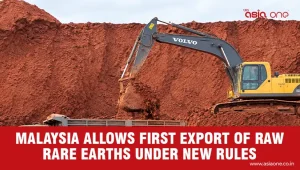


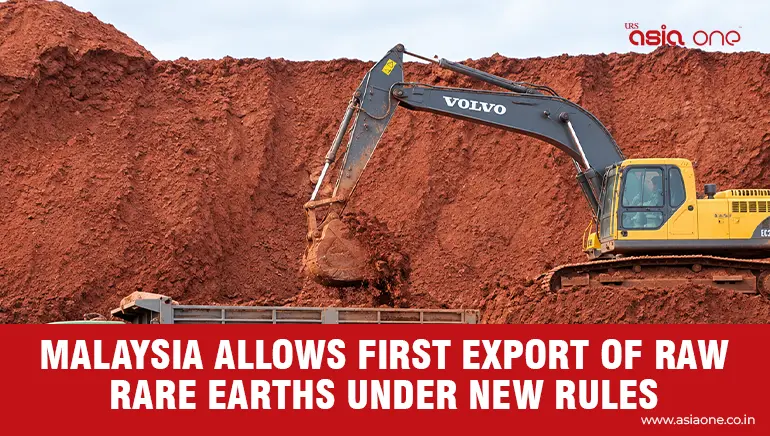
Malaysia has approved its first application to export unprocessed rare earths under a new framework that permits limited shipments for research and development or processing.
The Department of Mineral and Geoscience Malaysia granted approval for research and development purposes, the Ministry of Natural Resources and Environmental Sustainability said in response to a Bloomberg query. The ministry did not identify the applicant or disclose the volume of material involved.
The guidelines, issued in October, ease a moratorium on raw rare earth exports that had been in place since 2024. Approvals are conditional: applicants must comply with regulatory requirements, including commitments to develop processing and other value-added activities in Malaysia. The policy is intended to give companies limited access to material while keeping more of the economic benefits in the country.
Rare earth elements are used in products ranging from electric vehicles and wind turbines to electronics and defence equipment. China dominates global processing, prompting governments and companies elsewhere to seek more diversified supply chains.
Malaysia already hosts operations by Australia’s Lynas Rare Earths and has been attracting interest in further processing projects. The approval does not signal a return to unrestricted exports. The ministry has said the quality of investment, technology transfer and long-term value creation matter more than the number of applications approved.
It remains unclear whether additional applications are awaiting decisions. The first approval provides a test of how the rules will operate and whether conditional exports can support research and investment without undermining Malaysia’s push to build a local rare earth value chain.