


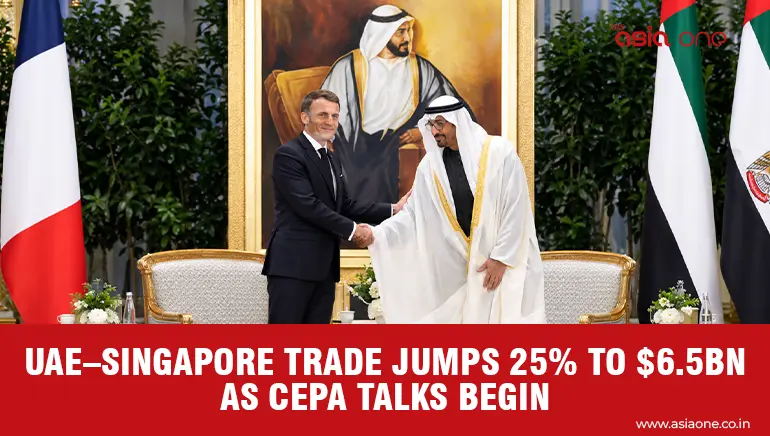
The United Arab Emirates and Singapore have launched negotiations for a Comprehensive Economic Partnership Agreement (CEPA), following a 25% rise in bilateral non-oil trade to about US$6.5 billion in 2025.
The two governments say the talks are intended to expand trade and investment and improve market access. A CEPA could reduce barriers for businesses, although its coverage and commitments will depend on the final terms agreed by both sides.
The negotiations build on a relationship that connects the UAE’s position as a commercial hub for the Middle East with Singapore’s role in Southeast Asian trade and finance. The governments have identified energy, technology, financial services, logistics, infrastructure and the digital economy as areas for closer cooperation. They also welcomed Temasek’s plan to strengthen its presence in the UAE through an office in Abu Dhabi, signalling continued interest in cross-border investment.
For the UAE, the agreement would add to efforts to broaden economic ties beyond traditional markets and strengthen non-oil activity. Singapore could gain a clearer framework for companies looking to expand in the Gulf and nearby markets.
The 25% annual increase in non-oil trade gives the negotiations a substantial existing base, but does not guarantee further growth. The practical impact will depend on the sectors covered, the concessions each side accepts and whether companies take up the resulting opportunities.
No final agreement has been announced. The two sides will need to negotiate its terms before the CEPA can enter into force.