



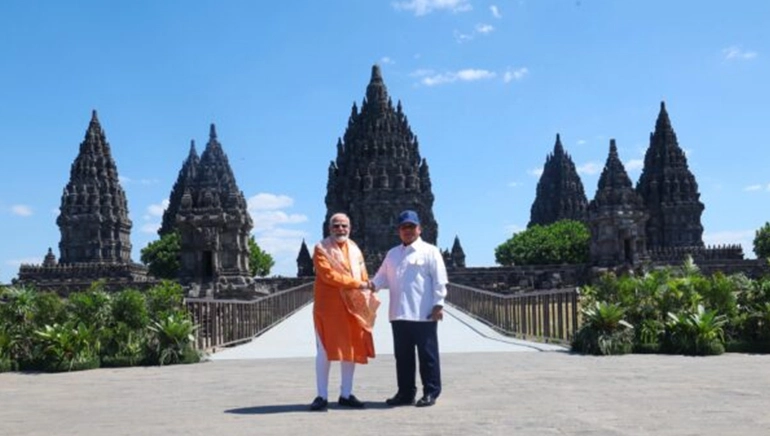
Prime Minister Narendra Modi visited Prambanan Temple in Indonesia, one of Southeast Asia’s most significant Hindu monuments and a lasting symbol of the shared civilisational ties between India and Indonesia.
Located 17 kilometres from Yogyakarta, Prambanan Temple is the largest Hindu temple complex in Indonesia and has been recognised as a UNESCO World Heritage Site. Built in the 9th century during the Ancient Mataram Kingdom, the complex is dedicated to Lord Brahma, Lord Vishnu, and Lord Shiva, the holy trinity.
The temple complex consisted of nearly 240 structures, with the 47-metre Shiva Temple standing at its centre. Each of the three main temples is accompanied by smaller shrines dedicated to their sacred Nandi, Garuda, and Hamsa, their sacred vehicles.
Prambanan is also renowned for its detailed stone carvings depicting scenes from the Ramayana. According to local tradition, the temple is associated with the legend of Roro Jonggrang, a Javanese princess linked to the site’s folklore.
Over the centuries, the temple suffered damage from earthquakes and periods of abandonment before undergoing extensive restoration, becoming one of Indonesia’s most visited cultural landmarks today.
For Indian travellers and history enthusiasts, Prambanan Temple represents more than an architectural masterpiece. It serves as a reminder of how Indian culture, religion, and art travelled across Southeast Asia more than a thousand years ago, leaving behind a legacy that continues to attract visitors worldwide.