


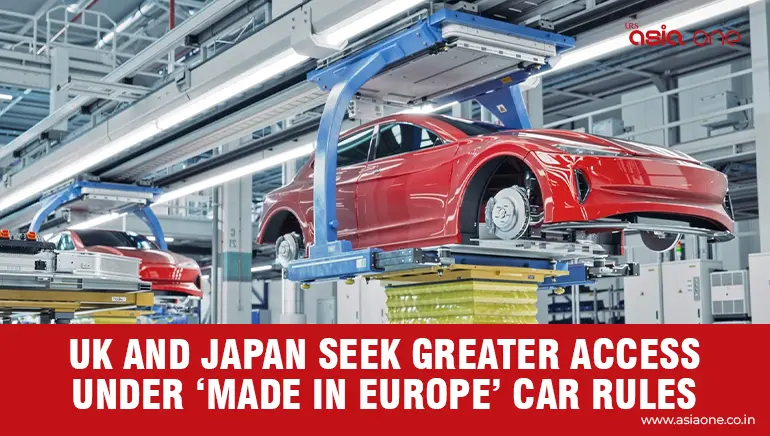
The UK and Japan are seeking changes to proposed European Union industrial rules that could limit the benefits available to their automotive industries. The EU’s “Made in Europe” policy is designed to strengthen European manufacturing and reduce dependence on Chinese supply chains.
The proposed measures would give greater preference to European-based manufacturing in areas such as electric vehicles and clean energy. Current automotive provisions could leave vehicles and components made outside the EU at a disadvantage when companies seek access to public procurement and subsidies.
Japan is pursuing a bilateral arrangement with the EU to secure better treatment for its automotive sector. The UK is also pressing for changes, with Prime Minister Andy Burnham raising the issue with French President Emmanuel Macron ahead of discussions on future EU-UK relations.
The issue is particularly significant for Britain because its automotive industry remains closely linked to European supply chains. The UK government has raised concerns with the European Commission and EU lawmakers over provisions that could disadvantage UK-built vehicles and integrated manufacturing networks.
Turkey is also seeking closer alignment with the proposed framework. Ankara has argued that excluding its manufacturers could damage both Turkish and European industrial interests because of its customs union with the EU.
EU officials have indicated that tailored agreements could be considered, although negotiations are continuing. European lawmakers are also debating how far the rules should go in protecting European manufacturing from competition linked to Chinese supply chains.