


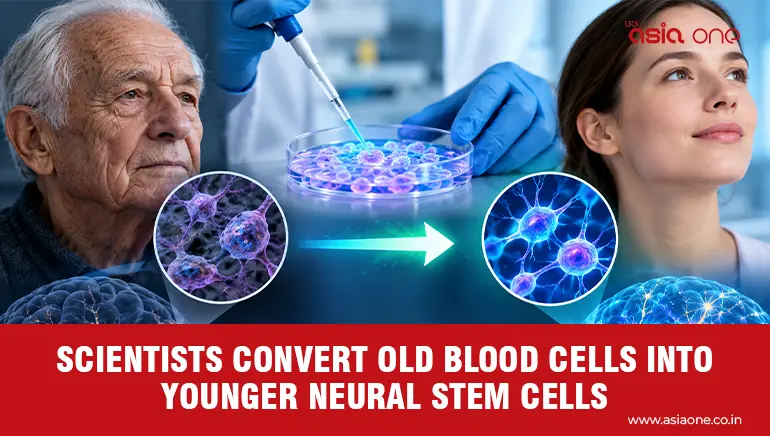
Researchers at the University of Bonn and University Hospital Bonn have converted human blood-cell precursors into neural stem cells showing younger molecular age markers in laboratory experiments.
The study, published in Aging Cell, used direct cellular reprogramming to transform blood-cell precursors into induced neural stem cells. These cells can develop into neurons and other specialised cells of the nervous system.
The researchers found that the process altered molecular markers associated with ageing. In one example, cells from an 80-year-old donor produced neural stem cells with a molecular age estimated at less than 20 years.
The team used the factors SOX2 and c-MYC to guide the conversion. Unlike approaches that first return cells to a fully pluripotent state, this method directly reprogrammes them towards a neural stem-cell identity.
The researchers said the process could help scientists investigate epigenetic rejuvenation, in which age-associated molecular patterns change. Studying these changes may improve understanding of how cellular identity and ageing interact.
The findings do not mean that ageing has been reversed in the human body. The work was conducted in laboratory-grown cells, and further research is needed to establish the method’s safety, stability and potential applications.
Neural stem cells are of interest because they can generate specialised cells in the nervous system. Researchers may use the technique to investigate age-related changes and study neurological conditions in controlled laboratory settings.
Any future medical application would require additional testing. Scientists would need to determine whether the reprogrammed cells function reliably and whether they could be used safely in research or treatment.
The study offers a possible tool for investigating cellular ageing, but it remains an early laboratory development rather than an established therapy.