



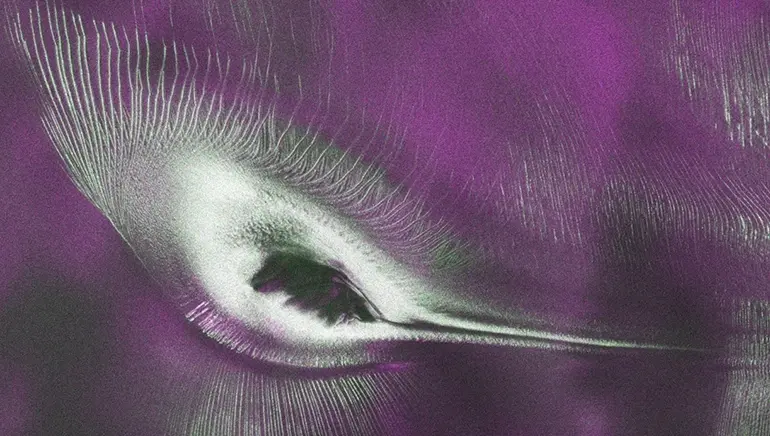
NASA’s NISAR satellite has captured an unusual radar image revealing a frozen landscape beneath Antarctica’s ice that resembles a hummingbird with outstretched wings. The striking formation is not a naturally carved shape but the result of a mountain disrupting the slow movement of glacial ice.
The image is centred on Nunatak Zaterjesshyjsja, a rocky mountain peak in East Antarctica that rises above the surrounding ice. While the mountain remains stationary, the glacier flows around it, creating distinctive cracks, stress patterns and shifting ice formations that together resemble a hummingbird.
Using advanced radar technology, NISAR mapped details hidden beneath the icy terrain that are invisible in conventional satellite imagery. Scientists say the colourful radar image provides valuable information on how Antarctica’s glaciers respond to obstacles, helping improve understanding of glacier dynamics, ice-sheet stability and the impacts of climate change.
Unlike optical satellites, NISAR transmits microwave radar pulses, allowing it to observe Earth’s surface regardless of cloud cover or daylight. In this observation, the spacecraft’s L-band radar transmitted horizontally polarised signals, with the returned waves displayed in different colours based on how they interacted with the ice.
According to the explanation, magenta areas indicate reflections from relatively smooth ice surfaces, while green highlights radar waves scattered by rough terrain or crevasses. Areas appearing white suggest a combination of smooth and rough ice structures.
NISAR is a joint Earth observation mission developed by NASA and the Indian Space Research Organisation (ISRO), combining L-band and S-band synthetic aperture radar systems, and enabling detailed observations of Earth’s changing surface.