



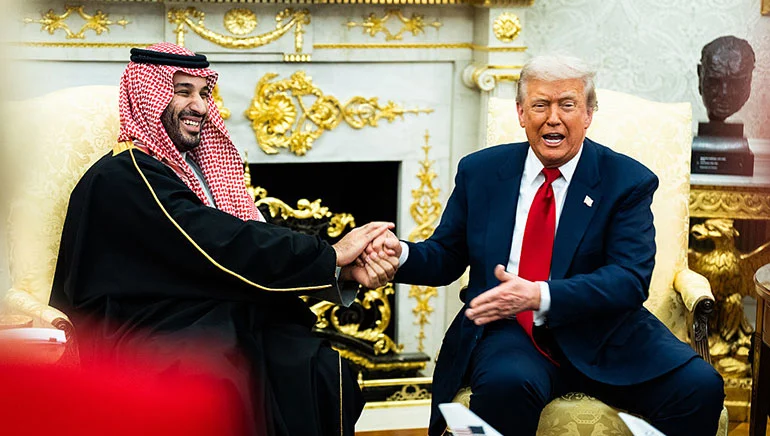
The United States and Saudi Arabia have agreed to a 30-year civilian nuclear cooperation framework that would allow American companies to build nuclear infrastructure in the kingdom, including reactors and related technologies. The agreement is designed to help Saudi Arabia diversify its energy mix, create significant commercial opportunities for US firms, and reduce reliance on Russian and Chinese suppliers.
A key feature of the agreement is that it could allow Saudi Arabia to enrich uranium domestically under strict conditions. Washington and Riyadh are expected to conduct a two-year joint study to determine whether a domestic enrichment facility is economically justified. If approved, the plant would be built by American companies under close US oversight, with sensitive enrichment technology remaining inaccessible to Saudi Arabia.
The proposed arrangement has drawn criticism from nuclear non-proliferation experts, who argue that allowing domestic uranium enrichment could increase the risk of nuclear weapons development, despite the agreement being limited to civilian purposes. Critics also point to the absence of the International Atomic Energy Agency’s (IAEA) Additional Protocol, which provides expanded international inspection powers, arguing that the new bilateral monitoring framework offers weaker safeguards.
Supporters of the deal maintain that keeping American companies directly involved in the programme would ensure continued oversight of enriched uranium and spent nuclear fuel while strengthening US strategic influence in the Middle East.
The agreement must now undergo review by the US Congress. Unless lawmakers pass a joint resolution blocking it, the deal will automatically enter into force after the review period.