



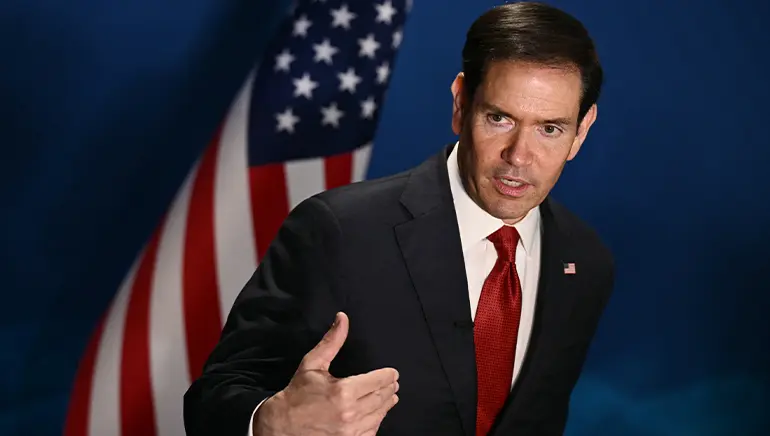
The United States has announced a new global visa restriction policy targeting individuals involved in cybercrime and cyber-enabled offences, including online investment scams and sextortion. The measure, announced by US Secretary of State Marco Rubio, is part of the Trump administration’s broader effort to combat international cybercrime networks.
Under Section 212(a)(3)(C) of the Immigration and Nationality Act, the policy allows the US government to impose visa restrictions on individuals found responsible for or complicit in cyber-enabled criminal activities. Rubio said the restrictions could also extend to the immediate family members of those involved.
In a statement, Rubio said the administration was taking action against what it described as an unprecedented threat from online investment scams, which allegedly defrauded US citizens of at least $10 billion in 2024. He added that cybercrime networks also fuel corruption, money laundering and human trafficking, while children have increasingly become targets of overseas sextortion schemes.
The new visa policy follows Executive Order 14390 on Combating Cybercrime, Fraud, and Predatory Schemes Against American Citizens, issued by President Donald Trump. According to Rubio, the administration will use sanctions, criminal prosecutions, asset seizures, extradition requests, and international law enforcement cooperation to dismantle criminal networks.
“The United States will go after those who prey on our citizens,” Rubio said, adding that restricting visas is intended to impose consequences on individuals who enable or participate in cyber-enabled criminal enterprises