


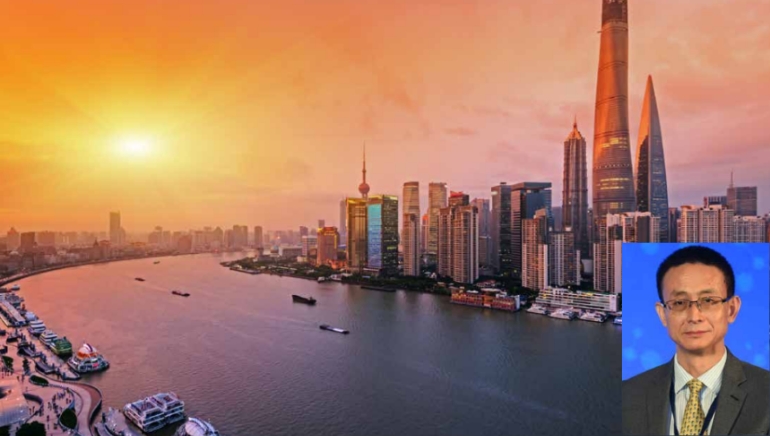
Called the Country of the Centre since ancient times, China has offered the world new philosophies, a vibrant and self-sustained culture, delicious cuisine, magnificent architecture, next-gen state-of-the-art intelligent technologies and equipment, affordable goods and magnificent tourism opportunities. Home to world-famous deserts, mountains, plateaus, rivers and seas, it holds a mysterious and exotic charm throughout its territory.
By His Excellency Mr. Tang Guocai, Consul General for People’s Republic of China, Mumbai
“A mix of ancient traditions & ultra-modern culture, China is a fascinating tourism destination”
The largest economy in the world in terms of purchasing power parity since 2014, and the world’s second-largest economy in terms of nominal GDP since 2010, China has been the world’s number 1 manufacturer since 2010, and has developed itself into one of the most diversified economies of the world, playing a major impactful role in international trade.
TOURISM OPPORTUNITIES
A marvelous mix of ancient traditions and ultra-modern culture, China is a fascinating tourism destination for the world. With a limitless scope of exploration, it is full of incredible experiences simply waiting to be unraveled. Some of its main tourism destinations include the following:
The Great Wall of China: This is the most important and a unique & magnificent ancient monument of China, known in Chinese as ‘Changcheng’, or the ‘Long Wall’, stretching more than 6,000 kilometers from the fortresses of Shanhaiguan in the east all the way to Jiayuguan in the west, passing through Hebei, Tientsin, Beijing, Inner Mongolia, Ningxia, and Gansu.
Its height varies from six to eight meters and at places rises to as high as 16 meters, and is wide enough at some places for five horses or 10 men to pass. Some of its battlements and watchtowers are dated back to the 7th century BC.
The Forbidden City and the Imperial Palace, Beijing: This is China’s largest and the most important building, situated in the very heart of Beijing. It consists of many splendid palaces in one, and was started during the Yuan Dynasty between 1271 and 1368, and was finally built between 1406 and 1420 as the residence of 24 Ming and Qing Emperors.
Some of its highlights include the five white marble Golden River Bridges; the Hall of Supreme Harmony, a 35-meter-tall building housing the imperial throne; the exquisite emperor’s banquet hall; and the Palace Museum with its large collection of art and artifacts from the Ming and Qing dynasties. Tiananmen Square is in its vicinity, and so is the Temple of Heaven.
The Terracotta Army: Considered China’s most important archeological find, the Terracotta Army was built to guard the First Emperor’s tomb by more than 8,000 life-size warriors, some 520 horses, and more than 100 chariots, along with numerous other non-military characters dating from around 280 BC. They represent the importance bestowed upon the emperor and the afterlife by the Chinese.
The Summer Palace: The splendid Imperial Summer Palace (Yíhé Yuán), built over more than 700 acres of beautiful parkland in 1153, is highlighted with the magnificent Hall of Well-being and Longevity (Renshou Dian) with its throne, and the beautiful Great Theatre, the Hall of Happiness and Longevity (Le Shou Tang Hall).
The ruins of the Old Summer Palace, one of the country’s most elaborate and architecturally attractive palaces, are still magnificent to visit.
The Classical Gardens of Suzhou: A UNESCO World Heritage Site, these magnificent gardens were established in the 11th century. The Garden of Lingering, a seven-acre site laid out in 1800 on the site of a park originally created during the Ming Dynasty, boasts a pool, several attractive buildings, a man-made hill, a grove of peach trees, and a lovely covered pathway on the walls of which hang more than three hundred stone tablets engraved with old Chinese characters.
Leshan Giant Buddha: Started in AD 713 by a Buddhist monk and completed 90 years later, the famous Chinese saying for this monument is: ‘The mountain is a Buddha and the Buddha is a mountain’. Carved entirely from a stone cliff-face, this is the largest Buddha sculpture in the world. A UNESCO World Heritage Site, it evokes deep religious faith and respect when visited.
Zhangjiajie National Forest Park: Located in Hunan province, it is considered the place that inspired filmmaker James Cameron to design the setting of forests of the movie ‘Avatar’. Its many unique pillar-like rock formations make for some incredible alien landscape right out of a sci-fi movie. Actually, one of the tallest pillars, at an impressive height of 1,080 meters, has been renamed ‘Avatar Hallelujah Mountain’.
Three Pagodas: Ensemble of three independent pagodas arranged on the corners of an equilateral triangle, near the old town of Dali, Yunnan province, China, dating from the time of the Kingdom of Nanzhao and Kingdom of Dali in the 9th and 10th centuries, these are elegant and unique examples of China’s ancient Buddhist architecture.