


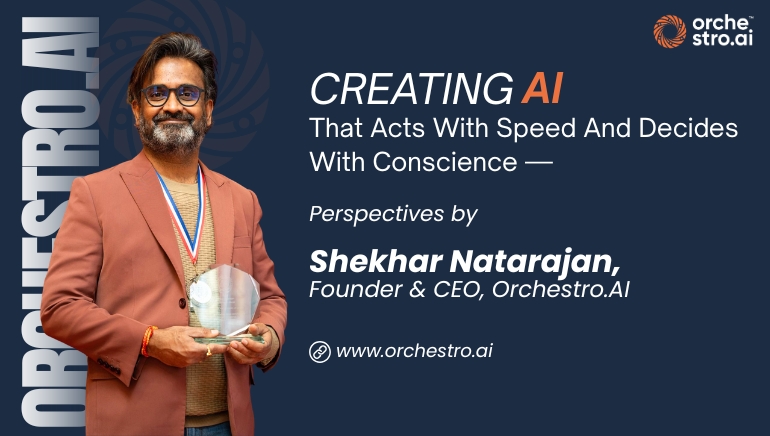
Building Orchestro.AI was like designing a city from scratch. I didn’t just want fast roads and tall buildings; I wanted a city where people felt safe, valued, and treated fairly. Most AI today is like a city built for speed. It has wide highways, automated traffic, but no consideration for pedestrians, no streetlights for safety, no empathy in planning. I wanted something different and that became Angelic Intelligence, the intellectual property of Orchestro.AI, protected with 83 pending patents. After 25 years in Fortune 500 leadership and 207 patents, I had learned how to turn bold ideas into engineered reality.
Angelic Intelligence is powered by 27 Digital Angels — each like a guardian of a city street or a sentinel ensuring every decision is aligned with human values. Compassion comes from Buddhist philosophy, justice from Islamic thought, courage from Stoicism, discernment from Confucian teaching, and accountability from democratic principles. The Digital Angels act like layered filters that ask: Is this route safe? Is it fair to all travelers? Does it respect the rules of the road? The result is not just the fastest path, but the right one!
With Angelic Intelligence, every AI decision, be it a healthcare triage, a governance decision, or a supply chain recommendation, passes through relevant Angels. They assess whether the proposed action honours fairness, preserves dignity, and meets ethical standards before execution.
Engineering the Angels presented immense challenges. How do you maintain virtue consistency across millions of simultaneous decisions? How do you prevent virtue-washing, where systems appear ethical but fail in practice? How do you ensure the AI acts swiftly without compromising human dignity? These real engineering problems were addressed through meticulous architecture and patented design.
The Digital Angels do not replace humans. They automate action while humans define the moral compass. I call it “the human in the loop of meaning, not execution.” AI operates at the speed of the city, but its conscience remains human.
Building AI this way is like planting a forest instead of cutting down trees for wood. It grows slowly and deliberately, but it lasts for centuries. The 27 Digital Angels make machines wiser, not just smarter. And in the long arc of time, what we build will not be remembered for how fast it moved but for how deeply it respected human dignity.