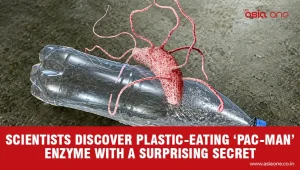


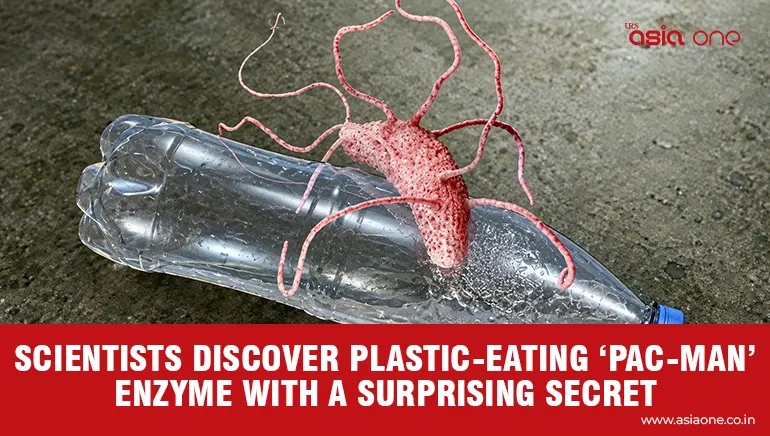
Scientists at the University of Konstanz have identified a bacterial enzyme that can break down certain biodegradable plastics. The discovery has attracted attention for an unexpected reason: the same enzyme can also act on some antibiotics.
Researchers identified the enzyme while investigating microorganisms in soil where a biodegradable polyester known as LCAP was decomposing. Unlike conventional plastics, which remained largely unchanged in the experiments, the polyester showed signs of substantial breakdown over time.
The team named the enzyme “Pac-Man” because of its role in breaking apart the material. It belongs to a family of esterases, enzymes that split chemical bonds found in substances including certain polyesters.
The enzyme’s structure showed similarities to beta-lactamases, a family of bacterial enzymes associated with antibiotic resistance. Laboratory tests confirmed that the newly identified enzyme could perform reactions associated with both enzyme groups, including breaking down beta-lactam antibiotics such as penicillin.
The finding highlights a connection between plastic degradation and antibiotic chemistry. It does not mean that the enzyme can consume every kind of plastic. Instead, the researchers believe the work could help guide the design of materials that are easier for microorganisms to break down. Plastics containing chemical bonds that enzymes can target may offer better prospects for biological recycling than polymers that resist decomposition.
The research also raises questions about how enzymes with multiple functions evolve in bacterial communities. Understanding their activity could help scientists develop more effective approaches to biodegradable materials while examining the relationship between microbial processes and antibiotic resistance.