


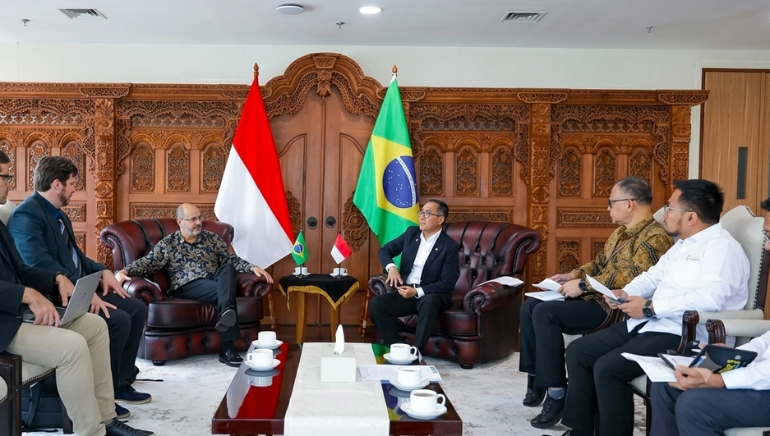
Indonesia and Brazil are cooperating in strategic technology sectors, focusing on semiconductors, aerospace engineering and sustainable biofuel technologies as both countries seek innovation and industrial competitiveness.
The initiative is centred on expanding collaboration between universities and research institutions, creating new opportunities for joint research projects, knowledge exchange and specialised training. Officials from both countries believe stronger academic partnerships can help accelerate technological development and support long-term economic growth.
Indonesia’s Minister of Higher Education, Science and Technology, Brian Yuliarto, highlighted the importance of unity between researchers and academic institutions, stressing that collaborative research and innovation programmes could deliver tangible benefits for both nations.
Semiconductor technology has emerged as a key focus area under the partnership. Planned initiatives include training programmes in semiconductor manufacturing, integrated circuit design, microfabrication and materials science, to develop the skilled workforce needed for future technology-driven industries.
The collaboration will also provide Indonesian postgraduate students with access to advanced research and training opportunities in Brazil, strengthening expertise in emerging technologies and supporting the development of next-generation talent.
Beyond semiconductors, the two countries are exploring cooperation in aerospace engineering and biofuel technologies, reflecting a shared commitment to innovation across sectors critical to economic diversification and industrial modernisation.
Officials expect the partnership to promote scientific exchange, encourage joint innovation projects, strengthen connections with universities, research centres and industry, while discussing broader educational initiatives, including academic mobility programmes and long-term institutional collaborations.