



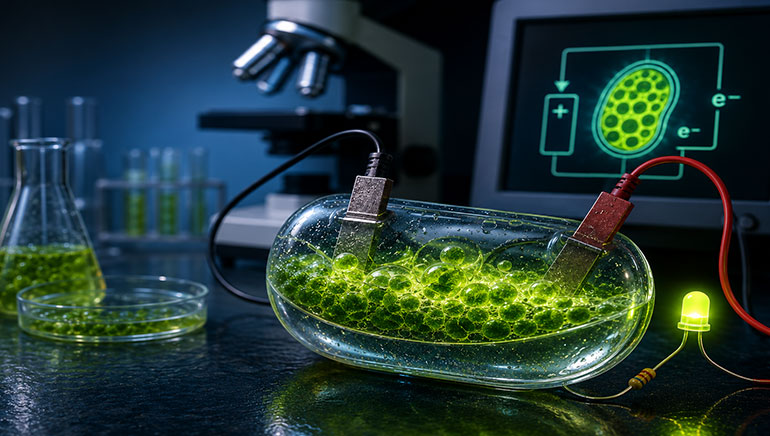
Researchers at the University of Cambridge have developed a living bio-battery that generates electricity using photosynthetic algae, offering a potential alternative to millions of disposable batteries used in low-power electronic devices.
Unlike conventional batteries that eventually run out of stored energy, the living bio-battery harnesses cyanobacteria, microscopic algae that naturally produce energy through photosynthesis during the day and respiration at night. This allows the system to generate a continuous flow of electricity as long as the organisms remain alive.
The technology is designed for devices that require only small amounts of power, including digital clocks, environmental sensors, and Internet of Things (IoT) devices. Researchers say the experimental system has been operating continuously for more than six years without replacing the living microorganisms.
According to the Cambridge team, the bio-battery is made from inexpensive, large, recyclable materials, making it a cleaner alternative to traditional batteries that rely on lithium, cobalt, and other mined materials. The researchers believe the technology could significantly reduce battery waste while lowering the environmental impact of powering everyday electronics.
Beyond consumer devices, scientists see potential applications in remote communities, agriculture, and environmental monitoring, where reliable electricity and battery replacement can be challenging. The team has also launched a startup, e-Pho, to help commercialise the technology and develop practical products.
While the living bio-battery is not intended to replace high-capacity batteries used in smartphones or electric vehicles, researchers believe it is an important step towards more sustainable energy solutions for low-power electronics.