


Vietnam has announced ambitious plans to develop between 6,000 MW and 17,000 MW of offshore wind (OSW) power capacity between 2030 and 2035, as the country accelerates its transition toward renewable energy and long-term energy security.
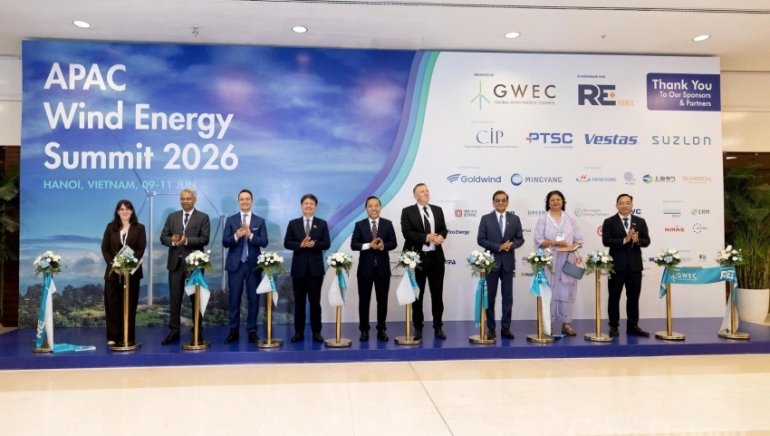
The announcement was made during the APAC Wind Energy Summit 2026 in Hanoi, where Vietnamese Deputy Minister of Industry and Trade Nguyen Hoang Long said the revised Power Development Plan VIII places offshore wind power as the centre of Vietnam’s national energy strategy.
Describing the target as highly ambitious, Long said the expansion of offshore wind energy would create a major market for businesses while supporting Vietnam’s broader economic growth goals. He also noted that Vietnam needs a new power generation capacity to sustain its rapidly growing economy and rising electricity demand.
According to officials, offshore wind was identified as a key priority under Resolution No.70-NQ/TW issued by Vietnam’s Politburo in 2025. The government is now expected to introduce additional policy measures and regulatory frameworks to accelerate implementation.
The summit highlighted Vietnam’s strong potential in renewable energy. Ben Backwell said Vietnam possesses offshore wind technical potential of up to 600 GW, alongside a strong industrial base, skilled workforce and fast-growing economy which could position the country as a regional renewable energy leader.
The summit also focused on international cooperation in the sector. Vietnam and the United Kingdom launched a new initiative to support offshore wind development, while Japan recently expanded renewable energy and critical minerals cooperation with Vietnam and Southeast Asia.
Global momentum for wind energy continued to strengthen, with nearly 165 GW of wind power capacity added worldwide over the past year. Experts at the summit noted that offshore wind development could help drive supply-chain expansion, industrial localisation, port infrastructure growth and creation of thousands of skilled jobs across the region.