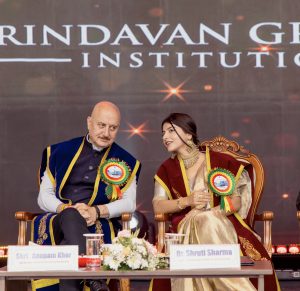




India’s education system is entering a phase of significant change. With fast-paced technological progress, changing industry requirements, and a large young population keen to learn, the coming decade is expected to reshape how education is delivered, experienced, and understood. According to Dr. Shruti Sharma, a forward-thinking leader in the education sector, the future of Indian education will be guided by innovation, flexibility, and a strong emphasis on overall development.
A Move from Rote Learning to Skill-Based Education
For many years, Indian education has been known for its focus on memorisation. This pattern, however, is steadily shifting. Dr. Shruti Sharma believes that in the next 10 years, the emphasis will clearly move towards skill-based and practical learning. Students will not be judged only on how much they remember, but on how well they can use their knowledge in real-life situations.
As industries increasingly look for work-ready individuals, educational institutions will bring in more practical exposure, internships, and project-based learning. This change will help reduce the gap between classroom learning and industry expectations, making students better prepared for their careers.
Technology Will Drive Education
Technology has already started influencing education, and its role will grow even further in the years ahead. From AI-driven platforms to virtual classrooms, digital tools will change the way students learn and access information.
Dr. Shruti Sharma highlights that personalised learning will be one of the key developments. Artificial Intelligence will study student performance and design lessons based on individual needs. This will allow each student to learn at their own pace, making education more effective and inclusive.
At the same time, hybrid learning models that combine online and offline methods will become common. This approach will offer flexibility and ensure that students from remote areas also get access to quality education.
Global Exposure and International Collaborations
In the coming decade, Indian education will become more connected with the global system. Institutions will actively pursue international partnerships, exchange programmes, and global certifications to enrich learning experiences.
According to Dr. Shruti Sharma, such exposure will help students understand different perspectives and prepare them to perform in a competitive global environment. Interaction with diverse cultures and ideas will also support creativity and critical thinking.
Focus on Holistic Development
Future education will go beyond textbooks and exams. There will be greater attention on overall development, including emotional intelligence, leadership abilities, creativity, and ethical values.
Dr. Shruti Sharma points out that institutions will aim to develop balanced individuals who can contribute positively to society. Activities such as sports, arts, social service, and mental wellness programmes will play an important role in shaping students’ personalities.
This approach will ensure that students grow not only academically but also emotionally and socially.
Rise of Emerging Fields and Interdisciplinary Learning
The employment landscape is changing quickly, with new career options emerging every year. Fields like Artificial Intelligence, Data Science, Cybersecurity, Renewable Energy, and Digital Marketing are becoming increasingly important.
Dr. Shruti Sharma believes that institutions will adopt interdisciplinary learning, allowing students to study subjects across different areas. For example, a student may combine technology with business or psychology, creating a strong and unique skill set.
This flexibility will help students explore their interests and choose career paths that match their abilities and ambitions.
Entrepreneurship and Innovation Will Be Encouraged
The next decade is likely to see a stronger focus on entrepreneurship in education. Institutions will encourage students to think independently, solve real-world problems, and come up with new ideas.
Dr. Shruti Sharma sees campuses developing into centres of innovation, where students can work on startup ideas, interact with industry experts, and receive mentorship and support. This will help create not only job seekers but also job creators, contributing to economic development.
Greater Emphasis on Values and Ethics
In a rapidly changing world, values and ethics will remain essential. Dr. Shruti Sharma stresses the need to include moral education and social responsibility within the curriculum.
Future education systems will aim to build individuals who are skilled as well as principled, compassionate, and responsible. This will contribute to the growth of a society that respects integrity, inclusiveness, and sustainability.
Government Policies and Institutional Reforms
Initiatives like the National Education Policy (NEP) have already laid the groundwork for improvement. In the next 10 years, further reforms and investments will support the growth of the education sector.
Dr. Shruti Sharma believes that cooperation between the government, institutions, and industry will be essential in building a strong education system. Better infrastructure, increased funding, and supportive policies will help India remain competitive at the global level.
Wrapping Up
The future of Indian education appears bright, evolving, and full of possibilities. As highlighted by Dr. Shruti Sharma, the coming decade will bring a shift from traditional methods to a more progressive, inclusive, and student-focused system.
With the use of technology, global connections, skill development, and attention to overall growth, India is well-positioned to emerge as a leader in education. The aim will not only be to provide knowledge but also to develop individuals who can adapt, think independently, and take initiative in a changing world.
In simple terms, the classrooms of the future will not just produce graduates—they will shape thinkers, leaders, and individuals who will influence the future of India and beyond.