


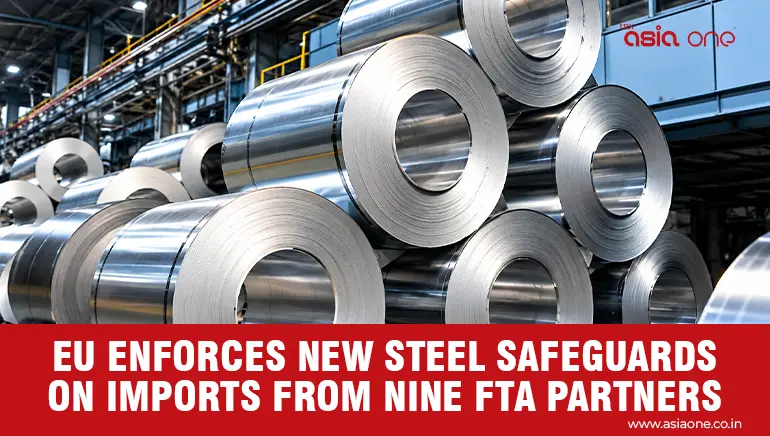
The European Union has introduced bilateral safeguard measures on certain steel imports from countries with which it has free trade agreements.
The measures were set out in Commission Implementing Regulation 2026/1930, adopted on August 4 and published the following day. They entered into force on August 6 under the EU’s new Steel Regulation, which addresses the effects of global overcapacity on the European steel market.
The European Commission had notified Switzerland, Serbia, North Macedonia, Israel, Morocco, Tunisia, Albania, Bosnia and Herzegovina and Jordan on June 22 that bilateral safeguards could be introduced. Türkiye was notified on June 30.
The relevant trade agreements allow the EU to impose safeguards when imports rise in quantities or under conditions that cause, or threaten to cause, serious injury to domestic producers. In some agreements, the measures can also be used when imports create serious disruption in a sector or difficulties that could worsen a region’s economic situation.
The safeguards form part of the EU’s broader effort to protect its steel industry from the effects of global overcapacity.
Under the wider steel framework, the EU is using tariff quotas to manage imports. Half of the 18.3 million-tonne quota is reserved for free trade agreement partners, with much of that volume allocated according to historic trade patterns.
The new regulation gives the Commission a separate mechanism for applying bilateral safeguards to steel products covered by the Steel Regulation when imports from FTA partners meet the conditions set out in their agreements with the EU.