



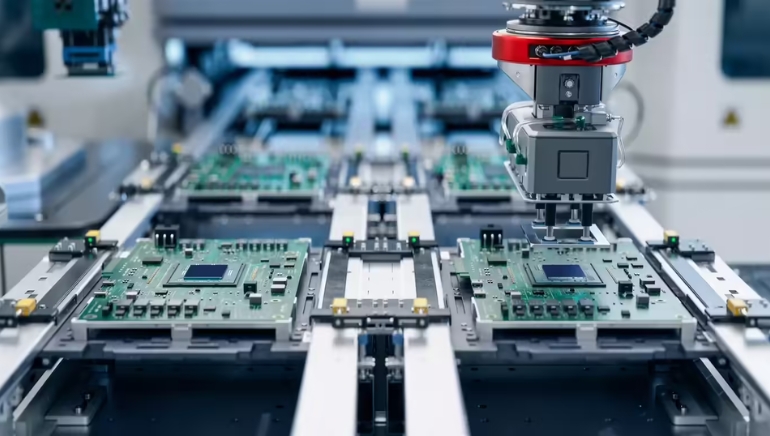
The Union Budget 2026–27 marks a pivotal step in India’s technological journey with the launch of India Semiconductor Mission 2.0, reinforcing the country’s ambition to become a global semiconductor powerhouse. The new phase reflects a strong policy push to deepen domestic chip capabilities at a time when semiconductors are central to digital infrastructure, defence systems, artificial intelligence, and industrial growth.
ISM 2.0 focuses on developing semiconductor equipment and materials within India, building full-stack indigenous intellectual property, and strengthening both domestic and global supply chains. A budgetary allocation of ₹1,000 crore for FY 2026–27 has been earmarked, with a strong emphasis on industry-led research, innovation hubs, and training centres to build a future-ready workforce.
This initiative builds upon the progress of India Semiconductor Mission 1.0, which laid the foundation for India’s semiconductor ecosystem with an incentive outlay of ₹76,000 crore. As of December 2025, 10 major projects worth ₹1.60 lakh crore have been approved across six states, spanning fabrication units, packaging facilities, and testing infrastructure.
India’s semiconductor market is witnessing rapid expansion, projected to grow from $38 billion in 2023 to $100–110 billion by 2030. Backed by initiatives like SEMICON India 2025 and aligned with Make in India, ISM 2.0 aims to position India as a trusted global hub for semiconductor design and manufacturing, targeting advanced 3nm and 2nm capabilities and global leadership by 2035.