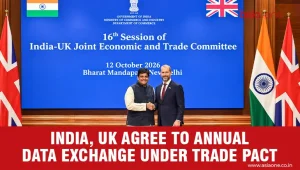




India and the United Kingdom inked a comprehensive free trade deal during Prime Minister Narendra Modi’s official visit to the UK. The accord aims to increase bilateral trade to USD 120 billion by 2030, from around USD 60 billion currently. FIEO, the exporters’ body, confirmed that 99 per cent of Indian tariff lines will have zero import duty in the UK.
This will benefit labour-intensive sectors like textiles, leather, footwear, gems and jewellery, pharmaceuticals, marine products, engineering goods, auto components, processed foods, and spices.
The new deal eliminates tariffs on garments and textiles, which formerly varied up to 12%, significantly enhancing competitiveness in UK markets. It is also intended to simplify regulatory procedures for pharmaceutical exports and allow for more efficient approvals in the UK.
FIEO President S C Ralhan stated that improved mobility options would open up new opportunities for Indian IT enterprises, business, and professional services, as regulatory and visa reforms improve market access.
The agreement is widely considered transformative, opening the way for sustained export growth, better commercial links, and closer economic integration between India and the UK.