



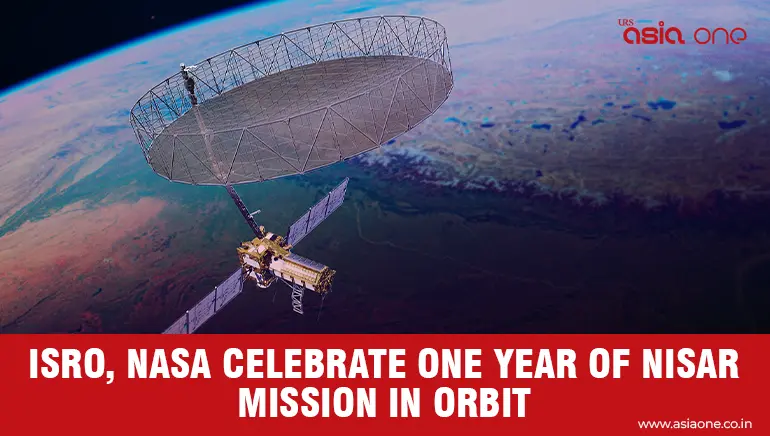
ISRO and NASA marked one year of NISAR operations during an event held in Bengaluru on August 18, 2026.
The NASA-ISRO Synthetic Aperture Radar mission launched aboard ISRO’s GSLV-F16 on July 30, 2025. It is the first joint Earth-observation satellite developed by NASA and ISRO.
NISAR carries dual-frequency L-band and S-band synthetic aperture radar technology. It can detect movements across land and ice surfaces down to the centimetre level.
The satellite operates in a sun-synchronous polar orbit, roughly 747 kilometres above Earth. It observes almost all of Earth’s land and ice surfaces every 12 days.
The mission entered its science operations phase in January 2026. It is planned to operate for at least three years.
During the Bengaluru event, teams from ISRO, NASA, and JPL reviewed mission performance, scientific results, data generation, and dissemination.
NISAR’s observations support applications including disaster response, infrastructure monitoring, and agricultural management. The anniversary also highlighted the expanding scientific cooperation between India and the United States.